
A journey into Earth Element practices and soil transformation
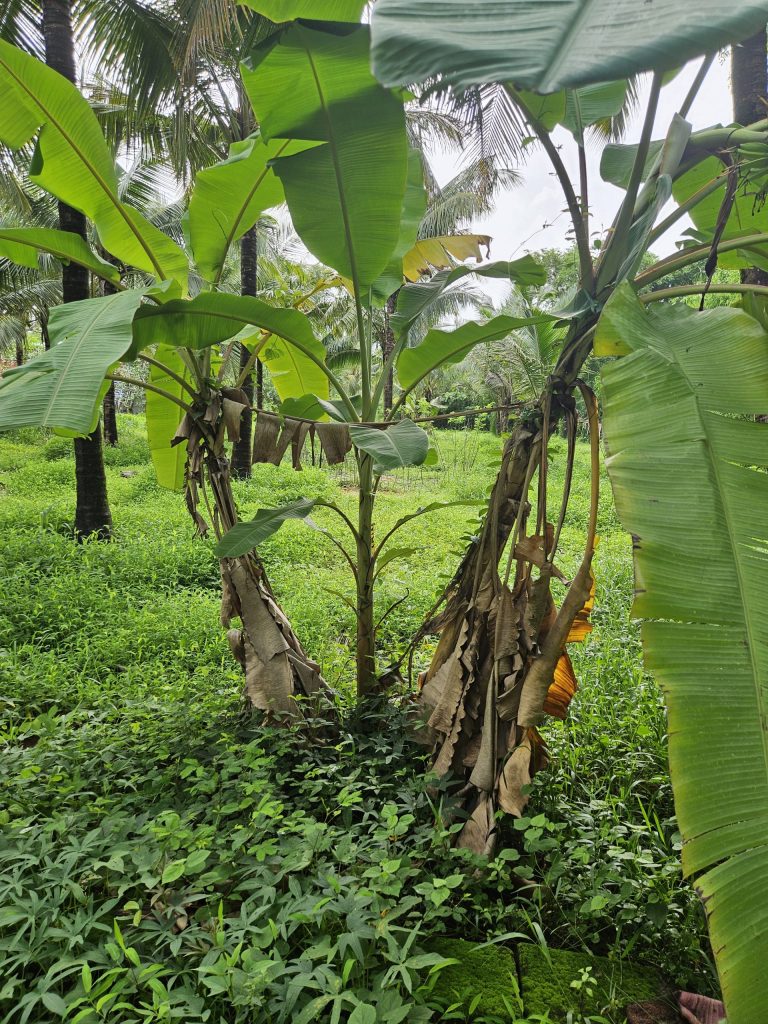
Grounding practices through soil connection have become our daily anchor in an increasingly disconnected world. These simple earth element practices—from morning composting routines to barefoot earth contact—offer profound healing for both nervous systems and the land itself.
There’s something magical that happens when you put your hands in soil every morning. Not the kind of magic you read about in books, but the quiet, grounding magic that settles your nervous system and connects you to something larger than urban life.
This morning, walking through our small farm in South Goa, checking the compost piles and feeling the rich, dark earth between our fingers, we were reminded of how far this earth element journey has taken us. From cement-debris wastelands to thriving mini forests, from apartment windowsills to regenerative farm plots, the Earth element (Prithvi in Sanskrit) has been our teacher through every transition.
In a world that often feels disconnected and rushed, working with soil has taught us that healing, both personal and planetary, begins with the most fundamental act: understanding that we belong to the earth, not the other way around.
The Earth Element: Foundation for All Healing
In traditional five elements philosophy, Earth represents stability, nourishment, and grounding. It’s the element that holds space for all others, the foundation upon which water flows, fire transforms, air circulates, and space expands. When we feel anxious, scattered, or disconnected, it’s often because we’ve lost touch with this fundamental earthing energy.
For most of our lives in urban apartments, Earth element practices seemed impossible. How could we connect with soil when our feet touched only tiles and cement? How could we participate in the earth’s natural cycles from high-rise buildings?
It took moving to a house with outdoor space to discover that earth connection could begin anywhere, even in the most damaged soil.
Our Earth Journey: From Debris to Forest
The Bangalore Beginning: Starting with Debris
When we moved to our new house in Bangalore, the builder had left our 200 square feet “garden” area filled with construction debris. Chunks of concrete, bits of rebar, compacted clay soil underneath. It looked more like a construction dump than any place where plants might grow.
We stood there wondering if anything could actually grow in this mess. But something about that challenge felt like exactly where we needed to start.
The transformation began with patience and daily practice. Every morning, we’d remove cement pieces by hand. Every evening, we’d add organic matter—kitchen scraps, dried leaves, anything that would begin feeding what little soil existed beneath the debris.
The Composting Education
Coming from apartment living where waste disappeared down chutes and soil came in bags from nurseries, the idea of building soil from scratch felt completely foreign.

We started with a Daily Dump Khamba composter – those beautiful terracotta stackable pots that Bangalore folks know well. The design made composting feel less intimidating, more like working with pottery than dealing with waste.
We learned slowly, through lots of trial and error. How to layer green materials like kitchen scraps with brown materials like dried leaves. How to keep the pile moist but not soggy. How to turn it for air circulation. How to tell when it was actually ready to use.
The Daily Dump folks had given us good instructions, but soil building still required patience we didn’t know we had.
But more than technique, we learned patience. Soil building can’t be rushed. The earth works on its own timeline, and trying to force faster results only creates problems.
What Happened Next
The transformation took time. Much longer than we expected. Months of removing concrete pieces by hand, adding kitchen scraps and leaves, waiting, turning, adding more organic matter.
Slowly, that compacted clay began changing texture. Dark, rich patches started appearing where we’d been adding compost. Small plants began volunteering in areas we’d been working on.
By the second year, we had medicinal plants growing next to flowering shrubs. A curry leaf plant that provided fresh leaves for daily cooking. Ginger sprouting in the shadier spots. And eventually, we planted some fruit trees – mango, coconut, avocado, and neem – in what had been concrete-filled ground.
Daily Grounding Practices: From Bangalore to Goa
Morning Soil Connection
Our earth element practice begins each day with soil contact. In Bangalore, this meant checking compost piles, tending the mini forest, touching the earth that was slowly coming alive. Now in Goa, it involves walking across our farm, hands in multiple compost areas, feet connecting directly with the land.
This daily earth connection has become more than garden maintenance. It’s become a way to settle our nervous systems. The scattered thoughts that often come with morning somehow slow down when we’re touching soil. Breathing feels deeper. The day ahead feels more manageable.
These grounding practices have become essential for our mental wellness. What started as simple soil contact has evolved into a comprehensive approach to earth element connection that anyone can adapt to their living situation.
Seasonal Soil Rhythms
Living closely with earth has taught us to attune to seasonal rhythms:
Pre-Monsoon (March-May) Earth is dry, waiting, preparing. We build up compost reserves, prepare beds, plan for monsoon planting. The land holds anticipation energy that we feel in our bodies too.
Monsoon (June-September) Everything explodes with growth. Compost breaks down rapidly, plants shoot skyward, the land comes alive with abundant energy. We adjust all practices for this surge of earth vitality.
Post-Monsoon (October-December) Time to gather finished compost, harvest vegetables, save seeds. The earth has given abundantly; we receive with gratitude and prepare for the next cycle.
Winter (January-February) Gentler earth work, planning next year’s plantings, letting some areas rest. Even the earth needs sabbath time.
The Mental Health Connection: Why Earth Element Heals
Through years of daily soil contact, we’ve felt how earth connection affects our mental state. Research shows that contact with Mycobacterium vaccae, a bacteria found in soil, can trigger serotonin release in our brains.
Studies on earthing and grounding show measurable effects on inflammation and stress hormones.
But beyond the science, earth element practices offer something our busy lives often miss.
Presence Over Productivity Soil building teaches patience. You can’t rush decomposition or force growth. This rhythm of natural timing becomes an antidote to urban urgency culture.
Regeneration Over Depletion Working with compost proves that nothing is ever truly waste. Everything can be transformed, renewed, made abundant again. This shifts how we approach problems in all areas of life.
Connection Over Isolation Understanding soil ecosystems reminds us that we’re not separate from nature—we’re part of an interconnected web. This naturally reduces the isolation that fuels anxiety and depression.
Cycles Over Linear Thinking Earth teaches circular time—seasons returning, nutrients cycling, life death rebirth happening constantly. This perspective provides resilience during difficult periods.
Practical Earth Element Practices for Every Living Situation
For Apartment Dwellers:
- Daily Soil Touch: Keep a pot of rich soil for morning grounding practices
- Container Composting: Small-scale vermiculture systems
- Windowsill Earth Gardens: Herbs and medicinal plants in quality soil
- Weekend Earth Pilgrimages: Regular visits to gardens, farms, natural areas
For House-with-Yard Residents:
- Start Composting: Begin with one small pile and learn from the earth
- Soil Regeneration Projects: Transform damaged areas through patient soil building
- Growing Food: Even a few vegetables changes your earth relationship
- Tree Planting: Think in decades, plant for future abundance
For Land-Based Living:
- Multiple Composting Systems: Different materials, different purposes
- Large-scale Soil Building: Understanding regeneration at ecosystem level
- Wild Area Conservation: Protecting and learning from undisturbed soil
- Community Earth Sharing: Teaching soil wisdom to neighbors and visitors
For detailed composting guidance, the University of California’s composting guide offers excellent technical resources.
Earth Element Practices by Season
Monsoon Earth Practices
- Celebrate earth receiving water’s blessing
- Adjust composting for increased moisture
- Plant monsoon crops with gratitude
- Practice mud connection during rains
Post-Monsoon Earth Practices
- Harvest finished compost for new plantings
- Gather seeds for next year’s abundance
- Appreciate earth’s fertile giving energy
- Prepare soil for dry season care
Winter Earth Practices
- Honor earth’s rest period
- Plan next year’s soil projects
- Practice gentle earth tending
- Reflect on year’s earth lessons
Pre-Monsoon Earth Practices
- Prepare compost areas for rain
- Build up organic matter reserves
- Plan monsoon plantings
- Appreciate earth’s patient waiting
From Soil Building to Soul Building
What we’ve learned through years of working with soil is that soil building and inner building seem to follow similar patterns. The patience needed for composting develops patience in other areas. The observation skills for reading soil health help us notice our own body’s signals. The faith needed to plant trees develops trust in life’s longer rhythms.
Understanding how damaged soil can slowly become healthy again has shifted how we think about healing in general. If concrete-filled ground can grow trees, maybe other stuck situations have more potential than they appear to have.
Starting Your Earth Element Journey
If you’re feeling called to explore grounding practices through earth element connection, begin exactly where you are:
In an Apartment: One pot of soil, one plant, five minutes of daily earth contact In a House: One small compost area, one vegetable bed, morning soil time On Land: Daily barefoot earth walks, multiple compost systems, seasonal alignment
Your relationship with earth doesn’t require perfect conditions or extensive knowledge. It requires only willingness to slow down, to touch the ground of being, and to trust that the earth wants to teach you.
The Invitation: Return to Your Foundation
Whether you’re healing damaged soil or damaged spirits, the process is remarkably similar. Patient attention. Daily presence. Trust in natural timing. Willingness to see waste as potential abundance.
The earth element waits to ground you, wherever you are. It asks only that you show up with hands ready to touch soil and heart ready to slow down to earth’s regenerative rhythm.
What earth element practice is calling to you from your current living situation? How might you begin your own journey from whatever debris—literal or metaphorical—needs transformation in your life?
The soil is waiting. Your nervous system is waiting. The healing is waiting.
All it takes is putting your hands in the earth and trusting in the miracle of regeneration.
What’s your earth element story? Have you experienced soil transformation in your living space? Share your earth connection journey in the comments below—we’d love to hear how Prithvi shows up in your life.
Ready to start your own regenerative living journey? Download our free guide: “10 Ways to Start Regenerative Living in a Flat” and discover earth element practices for every living situation.