Goat milk soap for sensitive skin: does it actually help?
Sensitive skin reacts to almost everything. Goat milk soap is one of the few things that tends not to cause a reaction. Here is why.
If you have sensitive skin, you already know the routine. You try something new, it looks promising, and within a week you are dealing with redness or a rash or that particular tightness that means your skin is not happy.
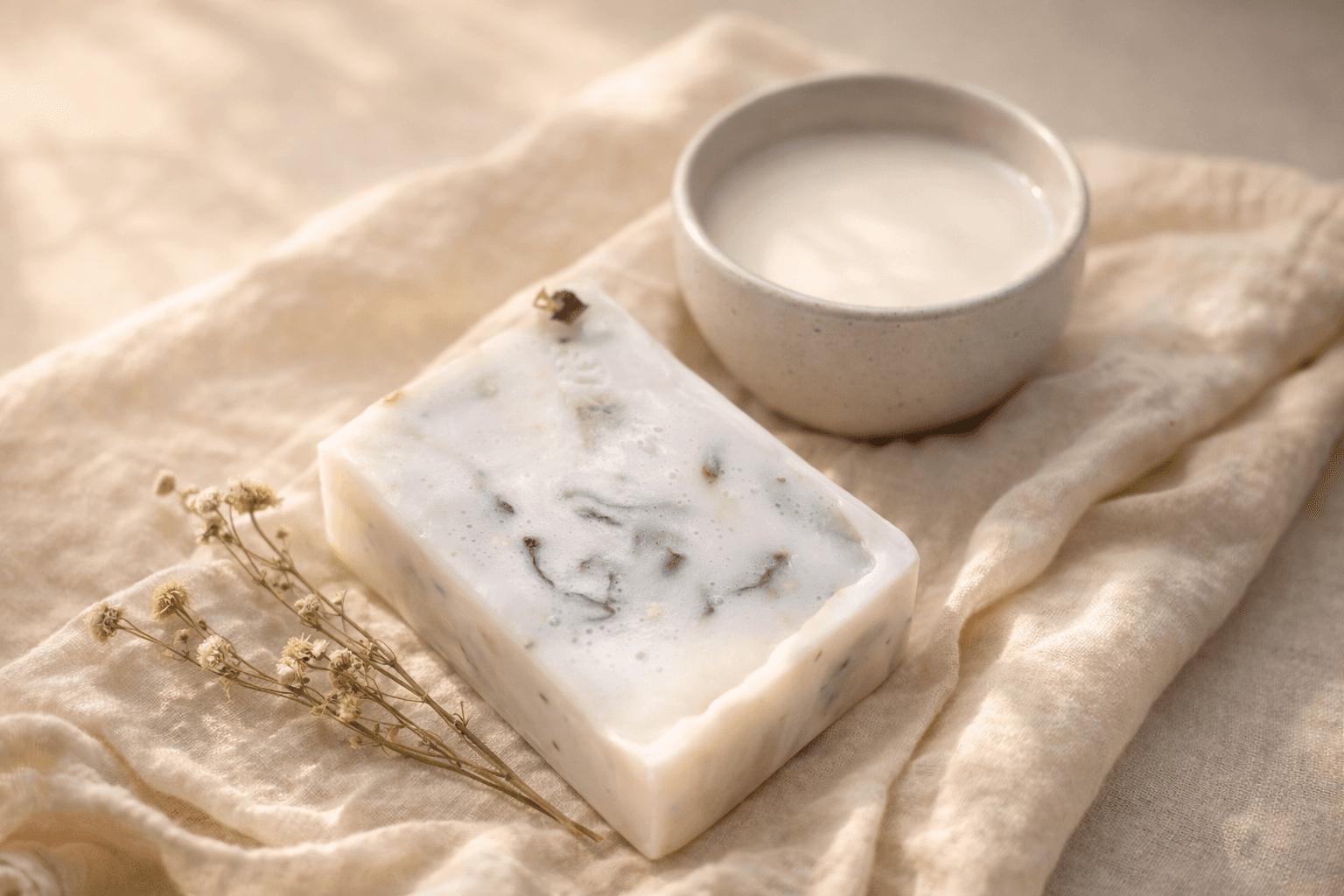
Goat milk soap keeps coming up as something worth trying. We make it, so we are not neutral on this, but we can at least explain the chemistry behind why it tends to work when other soaps do not.
What is in goat milk that matters
Goat milk contains lactic acid, a naturally occurring alpha-hydroxy acid (AHA). Lactic acid is a mild exfoliant. It gently removes dead skin cells without scrubbing or stripping.
For sensitive skin, this matters because build-up of dead cells can make skin look dull and feel rough. Harsh physical scrubs and chemical exfoliants can cause reactions. Lactic acid, at the concentration found naturally in goat milk, does the same job without the irritation.
Goat milk also contains fat molecules (capric acid, caprylic acid) that are closer in composition to the natural oils in human skin than most plant-based alternatives. This means your skin can absorb the moisture more readily, without feeling greasy or clogged.
The pH question
Your skin is slightly acidic. The acid mantle, a thin film on the surface, sits at around pH 4.5 to 5.5. When you wash with something that disrupts this, your skin has to work to recover. That recovery period is when it feels dry, reactive, or tight.
Goat milk soap sits closer to the skin's natural pH than most commercial soap alternatives. It cleans without pushing the skin far out of its comfort range.
What sensitive skin does not need
Most commercial body washes and soaps contain synthetic fragrance, sodium lauryl sulphate (a foaming agent), and various preservatives. Each of these is a potential trigger for sensitive skin.
Synthetic fragrance alone accounts for a significant portion of contact dermatitis cases. It is in almost everything. Even products labelled "unscented" sometimes contain fragrance to mask the smell of other ingredients.
Our goat milk soap uses no synthetic fragrance. The scent, if any, comes from the natural ingredients. Nothing added to make it foam more aggressively or last longer on a shelf.
What to expect when switching
If you are moving from a commercial soap to a natural one, your skin may take a week or two to adjust. This is not a reaction to the new soap. It is your skin recalibrating. The acid mantle is restoring itself.
During this period, some people notice minor dryness. This usually resolves. Give it two weeks before drawing any conclusions.
After that adjustment, most people with sensitive skin find they are reacting to far fewer things. When you stop disrupting the barrier every day, it stops needing to be in constant repair mode.
Where to find it
Our goat milk soap is available in the shop. It is made to order in small batches on our farm in South Goa, no preservatives, no shelf sitting, no shortcuts.
If your skin has been difficult for a while, it is worth trying something made from ingredients you can actually recognise.
Written by Healing Soil
"Came out of the shower smelling like a baby"
Try our handmade soaps
Made to order from our farm in Goa. No chemicals. No shortcuts.
Shop the collection