Handmade Soap for Sensitive Skin: Why Commercial Bars Irritate
What we learned after moving to a farm about SLS, parabens, and why removing a daily irritant is often all sensitive skin needs - and how we make our own soap instead.
The Best Handmade Soap for Sensitive Skin: What We Learned After Moving to a Farm
She had been buying a litre of moisturiser every single month.
Not because she had dry skin by nature. But because the moment she stepped out in the sun, her skin would flare up. Prickling, rashing, angry. She had been living like this for years. Tried different brands, different "sensitive skin" labels, different options. Nothing worked for long.
What nobody had told her was that the very thing she was using to clean her skin every morning might have been quietly making things worse.
We heard stories like this from two of our early customers. Both had been going through commercial product after commercial product without finding something that worked for them. When they eventually switched to our handmade soaps, the simplicity of the change surprised them. We are not going to make a claim here. Soap is not medicine. But sometimes removing something from your routine that is not agreeing with you is the most useful thing you can do.
That story is why we are writing this.
What Is Actually Inside a Commercial Soap Bar
Most commercial soaps, including the ones marketed as "gentle," "moisturising," or "dermatologist-tested," contain sodium lauryl sulfate, commonly written as SLS. It is the ingredient that creates the thick, foamy lather most of us grew up associating with clean.
SLS is a synthetic detergent. It is effective at removing oil and dirt, which is why it became so common. It is also more aggressive than it needs to be for most people's daily wash routine. For skin that tends to feel tight or uncomfortable after showering, SLS is often worth removing from the equation and seeing what happens.
Many commercial soaps also contain parabens, which are synthetic preservatives that extend shelf life. They are useful for products that sit in a warehouse for months before reaching you. Whether they are useful for your skin is a different question.
The "moisturising" claim on many soap labels is worth examining. Often it means the manufacturer has added something back in to compensate for what the SLS strips away. That is not moisturising in any meaningful sense. It is corrective.
Why Low Lather Is Not a Problem. It Is the Point.
Here is something that feels counterintuitive at first: soap that lathers less is often gentler on your skin.
Lather feels satisfying. It signals clean. But the foam is largely a sensory experience engineered for the brain, not the skin. The actual cleansing comes from the soap's interaction with oils and dirt on the skin surface, not from the bubbles themselves.
When you use a soap without SLS, it will not foam the way you are used to. The first few washes might feel strange. But your skin is still getting clean. It is just happening without the chemical that was stripping your moisture barrier each time.
Our soaps do not lather much. That is not a flaw in the recipe. That is the recipe working correctly.
How We Ended Up Making Soap on a Farm
About a year ago, we left the city and moved to a farm. The idea was to slow down, grow things, live more deliberately. We started with food, then herbs. Neem. Tulsi. Things we had only ever seen in products before, never growing in the ground.
After a while the question came up naturally: we have all of this. We dry it, we use it in everything else. What else can we do with it?
That is where the soaps came from. Not from a business plan. From having real ingredients and wanting to share them.
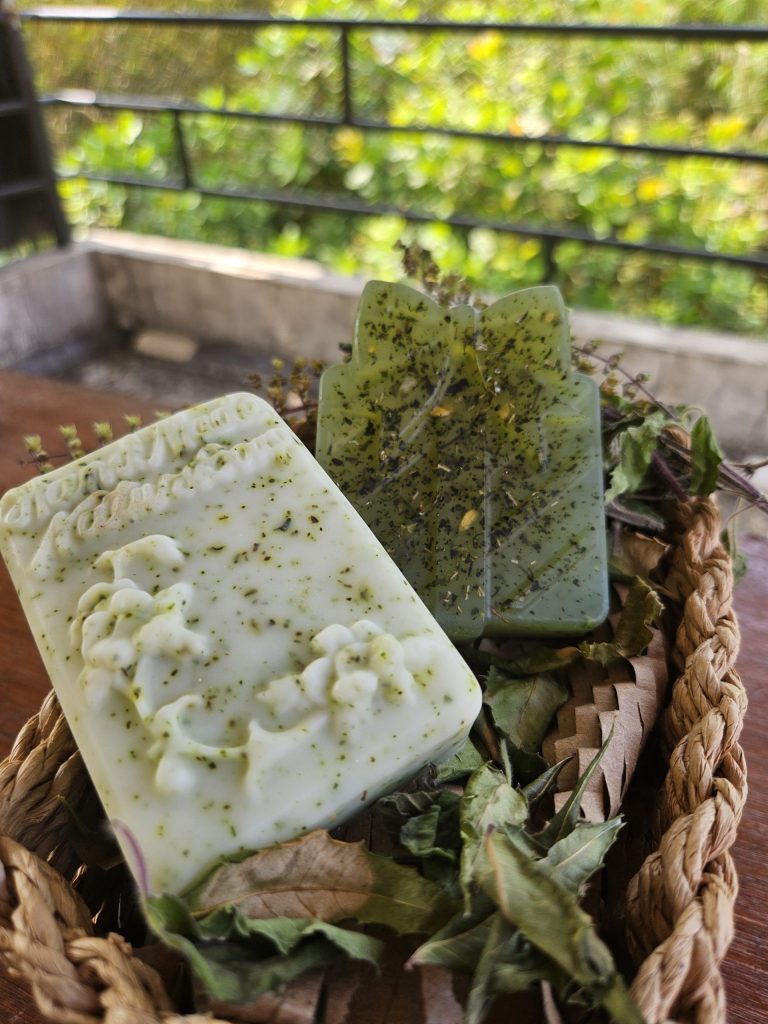
We spent months testing soap bases before settling on our current ones. We went with glycerin as one base and goat milk and shea butter as separate alternatives depending on skin type. Then we started infusing them with essential oils. The neem and tulsi we use comes from our farm. We clean it by hand, sun dry it, and grind it before it goes into the soap during the melting process. The honey is sourced locally.
Every batch is small. We only confirm an order once we know we have the ingredients available. Sometimes that means a short wait. We are fine with that. We would rather send you something made properly than something made quickly.
Honey Oats or Neem Tulsi? Here Is How to Choose.
We make four variants across two soaps. Each soap comes in both a glycerin base and a separate goat milk or shea butter base. Here is a simple way to think about which suits you.
Honey Oats Soap
Honey is a traditional personal care ingredient used across cultures for centuries. The oats we use are hand ground and give the lather a soft, milky quality. Together they make for a bar that feels gentle and nourishing - skin comes out feeling comfortable, not stripped. This soap is for people who want their skin to feel genuinely cared for after a shower, not just cleaned.
Neem Tulsi Soap
Neem and tulsi are two of the most familiar botanicals in Indian home life. Both have been part of traditional personal care and Ayurvedic practice for generations. In a soap, they produce a distinctly earthy, herbal scent that is natural and unmasked. This soap has a mild herbal fragrance. It is the one most of our customers who prefer a strongly traditional, botanical bar reach for first.
On Choosing a Base
Glycerin base is lighter and suits normal to combination skin well. Goat milk base is richer and works better for people with dry or oily skin that needs more support. Shea butter base is our most nourishing option and is good for skin that tends toward dryness or irritation. If you are not sure which to pick, just message us and we will help you figure it out.
The Honest Numbers
Our soaps are priced between Rs 250 and Rs 500 per bar. That is more than a supermarket soap and we get why that gives some people pause.
Here is the honest picture though. A single bar lasts about four weeks with normal daily use. That works out to roughly Rs 9 to Rs 18 a day depending on which soap you pick. Now think about what you might already be spending. A litre of moisturiser every month to manage reactive skin. A dermatologist visit every few weeks. The cost of trying product after product that promises gentle and delivers irritation. Suddenly Rs 9 a day starts to look like the cheaper option.
Most of our customers order three to four bars at a time, which also gets you free shipping on orders above Rs 1,000. They come back every three months or so, like clockwork. Not because we remind them. Because the soap runs out and they know what works for their skin.
We think that says more than any claim we could make.
A Different Way to Think About What You Put on Your Skin
Commercial soap is optimised for shelf life, scale, and cost. The decisions about what goes into it are made by procurement teams, not by someone who has to look at your skin afterwards.
Handmade soap made in small batches is a different kind of product. Not automatically better by virtue of being handmade. There is plenty of indifferent handmade soap out there too. But it means you can ask what is in it. You can know exactly where the ingredients came from. You can talk to the person who made it.
With commercial soap, you are a transaction.
With us, you are someone we actually want to help.
Not sure which soap is right for your skin type?
Chat with us on WhatsApp and we will help you find the right match. You will be talking directly with the maker.
View our full soap collection here
Healing Soil is a slow living project built around a farm in India. Our handmade soaps for sensitive skin are made in small batches using farm-grown neem and tulsi, locally sourced honey, and natural soap bases with no SLS and no parabens. Priced from Rs 250 to Rs 500. Delivered across India.
Written by Healing Soil
Made with the same values
Handmade soaps from our farm in Goa. No chemicals. Made to order.
See the soaps →