Natural soap for eczema and dry skin: what to look for
Eczema-prone skin needs soap that cleans without stripping. Here is what to actually look for, and what to avoid.
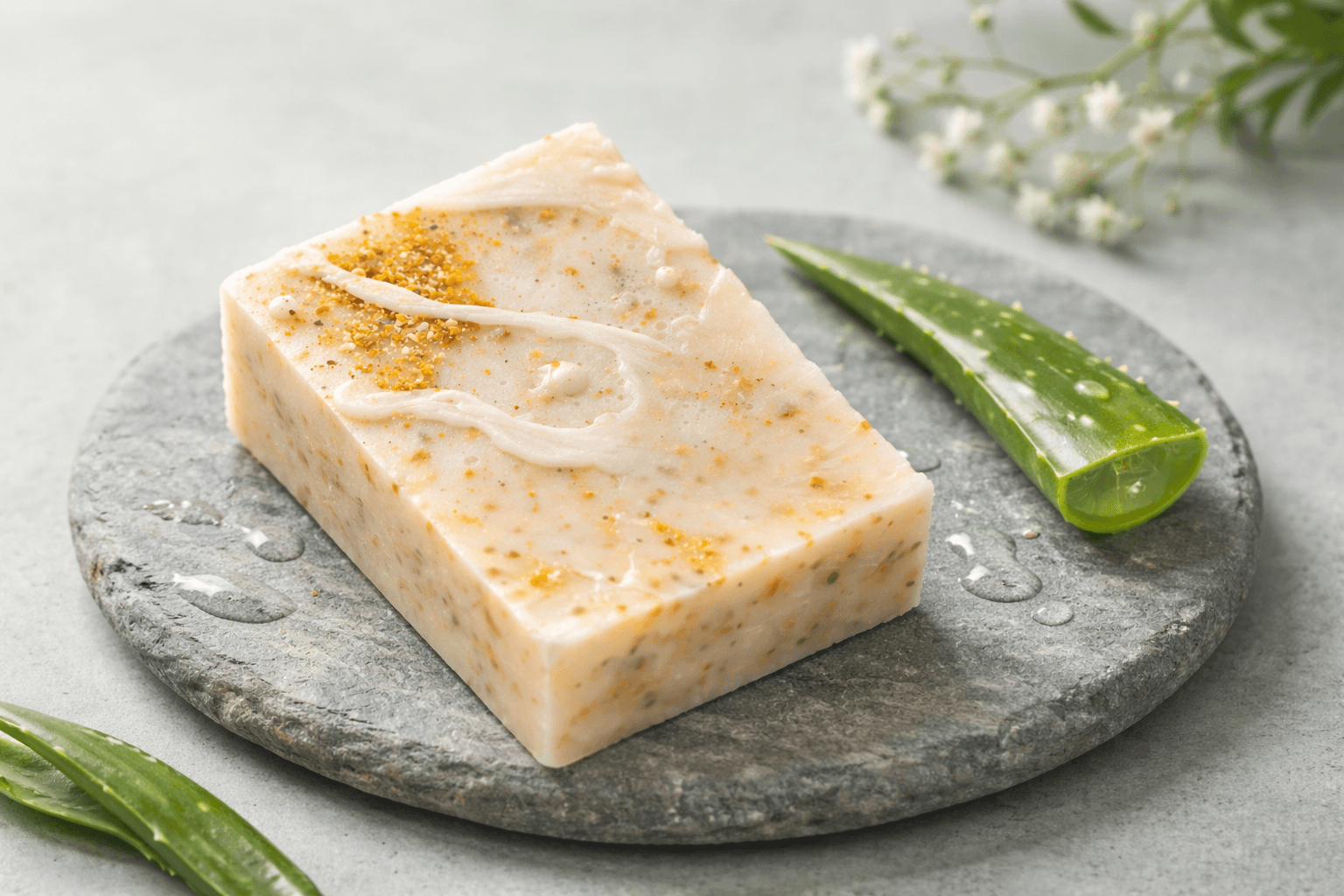
Eczema is not just dry skin. It is a condition where the skin barrier is compromised. It cannot hold moisture properly and it reacts to things that would not bother most people. Choosing the wrong soap can trigger a flare-up or make an existing one worse.
This is not about finding a miracle product. It is about understanding what eczema-prone skin actually needs and finding something that does not work against it.
What eczema skin is dealing with
Healthy skin has a barrier made of skin cells and lipids (fats) that hold moisture in and keep irritants out. In eczema-prone skin, this barrier has gaps. Moisture escapes more easily. Irritants get in more easily.
When you wash with a harsh soap, you strip the fats that form the barrier. For most people, the skin repairs this in a few hours. For someone with eczema, that repair is slower and less complete. Each wash with the wrong product is another step backward.
Ingredients that tend to cause problems
Sodium lauryl sulphate (SLS) is the main one. It is what makes commercial soap and body wash foam. It is also a known irritant for sensitive and eczema-prone skin. It disrupts the lipid layer directly.
Synthetic fragrance is the other big one. It is the most common cause of allergic contact dermatitis. If a soap has "fragrance" or "parfum" in the ingredients list, that is a single ingredient that could contain dozens of compounds, any of which could be a trigger.
Alcohol-based preservatives, some antimicrobial agents, and artificial colourants are also common culprits.
What actually helps
For eczema-prone skin, the goal is to clean without stripping. This means:
- No SLS or synthetic surfactants. The soap should clean through natural saponification, not aggressive foaming.
- Retained glycerin. In natural cold-process or melt-and-pour soap, the glycerin stays in the bar. It is a humectant that draws moisture to the skin as you wash. Commercial soap manufacturers remove it because it is valuable as a standalone product.
- Simple ingredient list. The fewer ingredients, the fewer potential triggers.
- No synthetic fragrance. If there is scent, it should come from essential oils or natural ingredients, at low concentrations.
Goat milk and neem for eczema
Goat milk soap works well for eczema-prone skin for the same reasons it works for sensitive skin in general. The lactic acid is gentle, the fat profile is close to human skin, and the pH stays in a range the skin can handle.
Neem has a long history of use for itchy, inflamed skin. It contains compounds like azadirachtin and nimbidin that have anti-inflammatory and antimicrobial properties. For eczema skin that is also prone to bacterial infection at scratch sites, this can make a real difference.
Both are available in our shop, as separate bars or combined.
A note on "dermatologist-tested"
This phrase on a soap label means very little. It does not mean the product is suitable for eczema. It means the manufacturer paid for a test. The results of that test do not need to be disclosed.
Read the ingredients list instead. If you can recognise what everything is, that is a better sign than any marketing claim.
Managing expectations
Natural soap is not a cure for eczema. Nothing applied topically is. But removing daily irritants, like switching from a harsh commercial soap to something gentler, can meaningfully reduce the frequency and severity of flares.
Start with one product, give it a few weeks, and pay attention to what your skin does. That is more useful than any ingredient claim.
Written by Healing Soil
"Came out of the shower smelling like a baby"
Try our handmade soaps
Made to order from our farm in Goa. No chemicals. No shortcuts.
Shop the collection