Shea butter soap: what it does and who it is for
Shea butter is one of the most fat-dense natural ingredients in skin care. Here is what that means in a soap, and when it is the right choice.
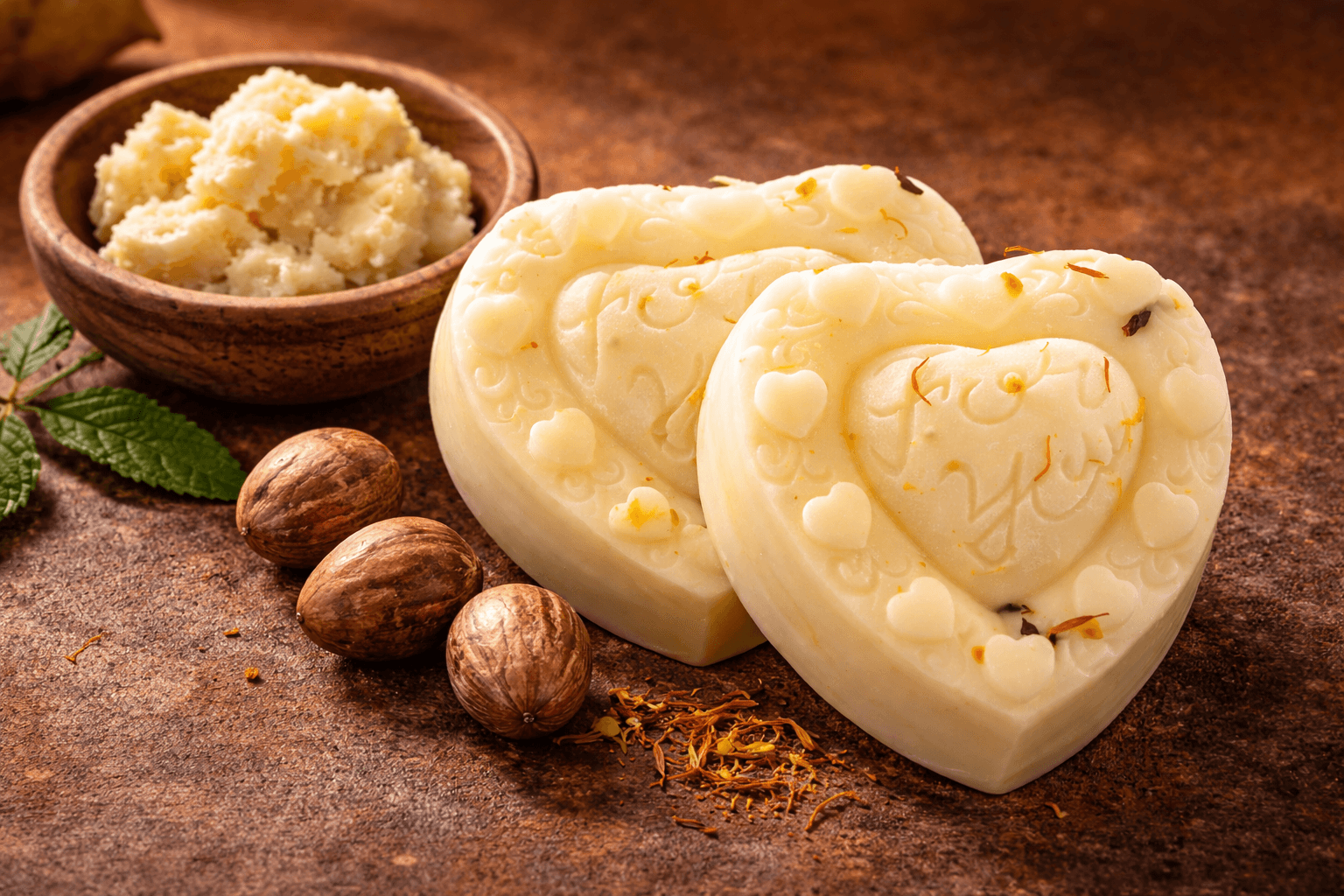
Shea butter gets talked about a lot in skin care. It appears in moisturisers, body butters, lip balms, hair products. But shea butter in a soap is a different proposition from shea butter in a leave-on product, and it is worth understanding the difference.
Where shea butter comes from
Shea butter is extracted from the nut of the shea tree (Vitellaria paradoxa), which grows across West and Central Africa. The nuts are cracked, roasted, and ground. The resulting paste is kneaded with water until the fat rises and sets. This is raw shea butter, a thick, ivory-coloured fat with a faint nutty smell.
It has been used for centuries in the regions where it grows, for skin, for hair, for cooking, for wound care. The widespread use across very different climates and skin types is part of why it has attracted as much research attention as it has.
What makes shea butter different in a soap
Most fats used in soap, like coconut oil, palm oil, and olive oil, are almost entirely saponifiable. This means they react completely with lye during the soap-making process and are converted into soap.
Shea butter has an unusually high unsaponifiable fraction, around 5 to 17 percent, compared to less than 1 percent for most other oils. The unsaponifiable fraction does not react with lye. It stays in the bar as-is.
This fraction contains:
- Phytosterols: plant-derived compounds that support barrier function and reduce inflammation
- Triterpene alcohols: linked to anti-inflammatory and wound-healing activity
- Vitamin E (tocopherols): antioxidants that protect skin cells from oxidative damage
- Vitamin A: supports cell turnover and skin renewal
What this means practically: when you use shea butter soap, you are washing with a bar that deposits conditioning agents on your skin as part of the wash. You do not need to apply a separate moisturiser afterwards in the way you might with a standard soap.
Shea butter and inflammation
Several of the compounds in shea butter's unsaponifiable fraction have documented anti-inflammatory effects. Research on shea butter extracts has shown reduction in markers associated with skin inflammation.
For skin conditions characterised by redness, irritation, or inflammatory response (eczema, rosacea, psoriasis, heat rash), this is relevant. Shea butter soap does not treat these conditions, but using a soap that actively reduces inflammation rather than contributing to it makes a difference over time.
The texture and feel
Shea butter soap is the richest-feeling of our three bases. Where glycerin soap feels clean and light and goat milk soap feels creamy, shea butter soap feels dense and conditioning. Some people find this takes a wash or two to get used to. It does not feel like anything from commercial skin care.
The lather is soft and creamy rather than foamy. Again, this is different from what most people are used to. It is cleaning; it just does not perform like a synthetic surfactant.
Who it is for
Shea butter soap works best for:
- Very dry or chronically dehydrated skin
- Skin that is dry in patches, like elbows, knees, and heels
- Winter skin, when cold air and indoor heating strip the barrier daily
- Ageing skin that has lost some of its natural oil production
- Skin with ongoing low-level inflammation like eczema, rosacea, and heat-prone skin
- People who step out of the shower feeling tight and uncomfortable regardless of what soap they have used
It is not the best choice for oily or acne-prone skin. The fat content that makes it so good for dry skin can feel heavy on skin that already produces a lot of sebum.
One bar, fewer steps
The practical argument for shea butter soap is that it can replace soap and post-shower moisturiser in one step. The conditioning fraction stays on your skin after you rinse. For people who forget to moisturise, find it inconvenient, or simply do not want another product in their routine, this is useful.
This is not a marketing claim. It follows from the chemistry. The unsaponifiable fraction does not rinse away.
Available in the shop
Our shea butter soap is made to order in small batches on our farm in South Goa. No preservatives, no synthetic additives, no warehouse shelf time. You can find it alongside our glycerin and goat milk bars in the shop.
If your skin has been dry and difficult for a while, this is probably where to start.
Written by Healing Soil
"Came out of the shower smelling like a baby"
Try our handmade soaps
Made to order from our farm in Goa. No chemicals. No shortcuts.
Shop the collection