Glycerin vs Goat Milk Soap Base: Which Is Better for Your Skin?
Glycerin soap base feels light; goat milk soap base feels creamy. Compare ingredients, lather, scent, and after-wash feel.
Made by hand in South Goa
Handmade soap with no SLS, parabens, or synthetic fragrance. Send us a message on WhatsApp and we will help you find one that suits you.
When someone visits our shop for the first time, the question is almost always about the soap base: what is the difference between glycerin and goat milk, and which one should I get?
The honest answer is that it depends on your skin. Each soap base behaves differently and suits different skin types. Once you understand what each one does, the choice usually becomes clear.
What is a soap base?
A soap base is the core ingredient blend from which a bar is made. It determines how the soap lathers, how it feels on skin, and what it leaves behind after you rinse.
We use three soap bases at Healing Soil: glycerin, goat milk, and shea butter. Each begins from a different starting point and produces a noticeably different bar.
Glycerin soap base: clean and light
Glycerin is a natural by-product of the soap-making process. Most commercial soap manufacturers remove it because it sells separately as a cosmetic ingredient. In our glycerin bars, it stays in the bar.
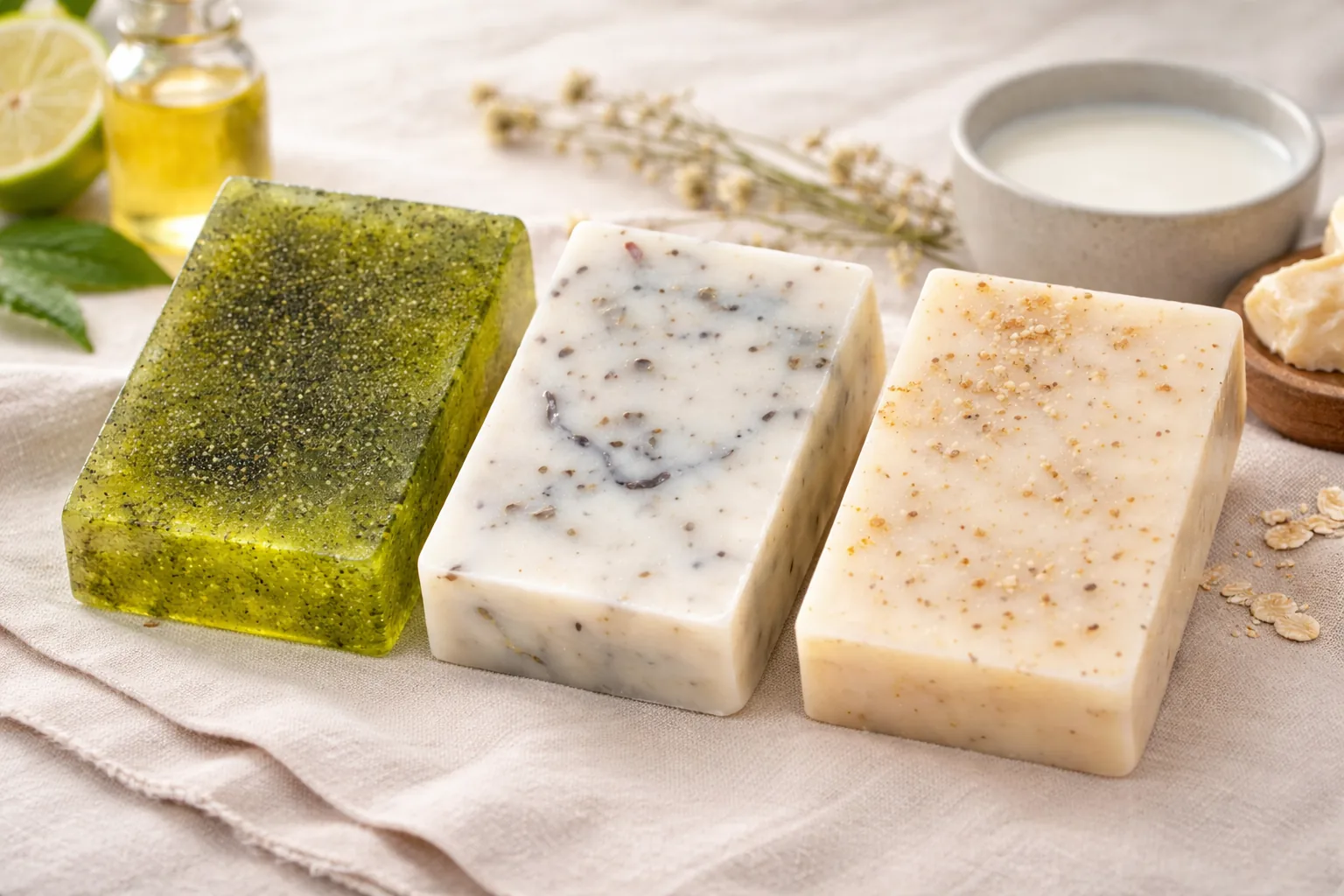
The bar is clear or semi-transparent, the lather is light, and the feeling after washing is clean without being heavy.
This is a useful starting point if you prefer a lighter wash. Rich, creamy soaps can feel like too much when you want an easy-rinsing finish.
It is also a good everyday bar for anyone with normal skin, especially in warmer months.
Goat milk soap base: gentle and nourishing
Goat milk replaces water in this base. That one change makes the bar feel noticeably different.
Goat milk gives the bar a naturally creamy lather and a richer texture than glycerin.
After washing, skin feels nourished, not just clean.
It is a versatile base suitable for sensitive and dry skin types, as well as anyone who simply prefers a creamier wash.
Glycerin vs goat milk soap base: quick comparison
| Glycerin soap base | Goat milk soap base | |
|---|---|---|
| Lather | Light, clear | Creamy, rich |
| Feeling after wash | Clean, light | Nourished, soft |
| Best for | People who prefer a lighter wash | People who prefer a creamier wash |
| Season | Year-round; especially summer | Year-round |
| Where to start | If you want an easy-rinsing feel | If you want a richer lather |
Shea butter soap base: rich and deeply nourishing
Shea butter is the richest-feeling of the three bases. It creates a dense bar, a creamy lather, and a conditioning after-wash feel.
The lather is thick and creamy. The bar feels dense. On skin, the feeling is conditioning rather than just clean.
It suits people who enjoy a rich wash and want their skin to feel soft afterwards. If you are weighing shea butter against goat milk specifically, our goat milk vs shea butter comparison covers that directly.
A quick way to decide
If you prefer a light, easy-rinsing wash, start with the glycerin soap base.
If you prefer a creamy but balanced wash, start with goat milk.
If you prefer the richest and most conditioning texture, choose shea butter.
Many people use more than one. A glycerin bar for the body in summer, shea butter in winter. A goat milk bar for the face and something else for the body. There is no rule.
Compare before choosing
If you are switching from a standard commercial bar, the most useful next read is glycerin soap vs regular soap. It explains why a light glycerin bar can feel cleaner without the heavy after-feel.
If you want the creamy option instead, read goat milk soap vs commercial soap. Goat milk is usually the easier first handmade base for people who want a softer wash.
You can find all three soap bases in our handmade soap shop, each made to order in small batches with no preservatives or synthetic additives.
Written by Healing Soil
Want the full picture? Read our complete guide to handmade soap in India.