Healing Soil
HandmadeNo chemicalsSmall batchMade to orderGoa
skincare

Goat Milk Soap Benefits: What It Does for Your Skin and Why It Works

Goat milk soap has been part of natural skincare for centuries. What actually makes it different? A clear look at what goat milk brings to a soap bar, how it compares to other bases, and who it works best for.

Goat Milk Soap Benefits: What It Does for Your Skin and Why It Works

Try the starter bundle

Four soaps, ₹1,000. SLS-free, made to order from Goa. Free shipping.

See the bundle

Walk into any natural soap shop and you will see goat milk on the label. It has become one of the most sought-after ingredients in handmade soap, and for good reason. But "natural" alone does not explain why a goat milk bar feels different from everything else in your bathroom cabinet.

This post covers what goat milk actually contributes to a soap bar, the specific properties that make it stand out for moisturising and gentle cleansing, how it compares to other common soap bases, and what to look for when buying.

What goat milk soap actually is

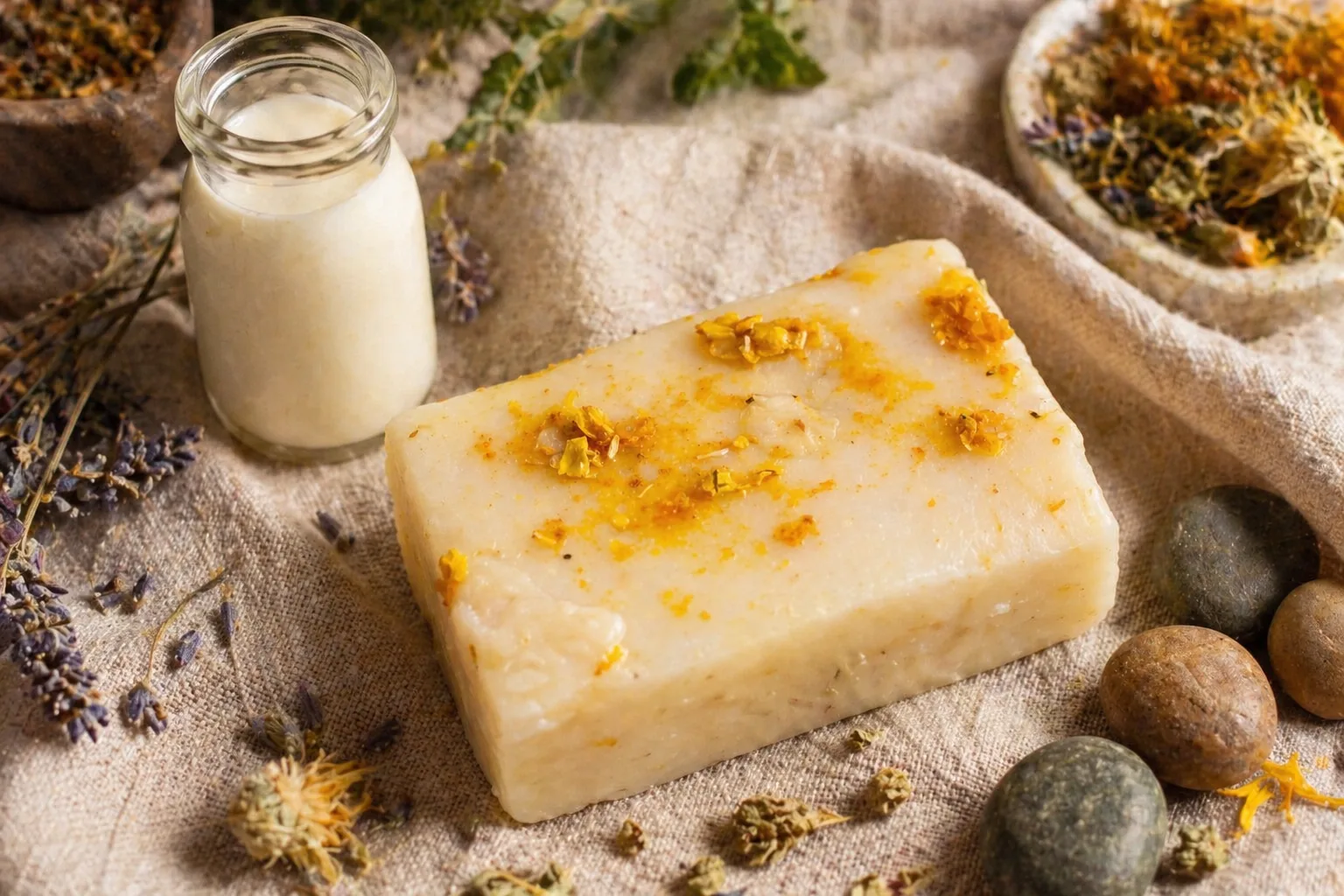
Goat milk soap is made by replacing the water in the soap-making process with fresh goat milk. This is an important detail. When goat milk is a structural ingredient, not just a small addition at the end, everything it contains becomes part of the bar.

Goat milk is rich in natural fats, lactic acid, and a range of vitamins including A, B-group, C, D, and E, along with trace minerals like zinc and selenium. When the base is built on milk rather than water, these elements stay in the bar rather than being rinsed away before you even open the packaging.

That is the foundational difference. Everything else follows from it.

Goat milk soap benefits for skin

A genuinely moisturising lather

Most soaps clean by stripping. They lift oil, debris, and bacteria from the skin surface, and everything else comes with it, including the moisture your skin was holding onto.

Goat milk soap behaves differently because of two things it brings that water-based soaps do not.

First, natural fats. Goat milk contains a high proportion of short and medium chain fatty acids, which are structurally smaller fat molecules close in composition to the lipids your skin produces. Your skin absorbs these easily and with very little resistance. The moisturising effect is not a surface coating. It absorbs and stays.

Second, naturally occurring glycerin. Properly made handmade soap retains the glycerin produced during saponification. Commercial manufacturers extract it because it is more valuable as a separate cosmetic ingredient. In a well-made goat milk bar, the glycerin stays in the soap, drawing moisture gently into your skin as you wash.

The result is a bar that cleanses and leaves skin feeling soft and nourished. Not that tight, stripped feeling that follows most commercial soap.

Suitability for sensitive skin

Sensitive skin reacts to disruption. Harsh surfactants, synthetic fragrance, preservatives, and highly alkaline cleansers all disturb the surface and can leave reactive skin feeling worse after washing than it did before.

Goat milk soap is suitable for sensitive skin for several interconnected reasons.

The pH of goat milk sits closer to skin's natural range than most synthetic cleansers. This means the bar is gentler in itself, without needing additional pH-adjusting ingredients that add to the formulation complexity.

The lactic acid naturally present in goat milk contributes to a gentler, creamier lather than water-based alternatives. The concentration is mild and contributes to the overall softness of the wash experience.

The fat composition means the skin is not left dry after washing. Dry skin is more reactive skin. By keeping the skin surface nourished throughout the cleansing process, goat milk soap removes one of the main irritation triggers that sensitive skin encounters daily.

And because a properly made goat milk soap contains no SLS, parabens, synthetic fragrance, or artificial preservatives, the usual suspects for skin reactivity are simply absent.

Suitable for daily use, face and body

A lot of gentle or sensitive-skin products are designed to be used sparingly, as occasional, careful additions to your routine. Goat milk soap is a daily bar. You can use it on your face and body every day without accumulating the minor damage that most cleansers cause over time.

For skin that has been managed with commercial products, switching to a goat milk bar often involves a short settling period as the skin adjusts to not being stripped daily. After that adjustment, most people find their skin needs significantly less support from other products.

How goat milk soap compares to other soap bases

Understanding where goat milk sits relative to other bases helps you choose the right bar for your skin type and how it behaves day to day.

Goat milk soapGlycerin soapShea butter soapCommercial soap
LatherCreamy, richLight, clearThick, denseHeavy, foamy
Feeling after washNourished, softClean, lightDeeply conditionedOften dry, tight
Key ingredientGoat milk as baseRetained glycerinUnsaponified sheaSLS, synthetic foaming agents
Best forSensitive, dry, all skin typesOily, normal, combinationVery dry, mature skinNot recommended
Glycerin retained?Yes (handmade)Yes (handmade)Yes (handmade)No (extracted in manufacturing)

Goat milk vs glycerin soap

Glycerin soap is the lighter of the two. The lather is thinner, the feeling after washing is clean without being rich. For oily or combination skin, this is exactly right. You get the cleansing without feeling weighed down after.

Goat milk is the better choice when your skin needs more nourishment. The fat composition and creamier lather make a noticeable difference on dry or sensitive skin that needs more than a clean rinse. If you are not sure which base to start with, goat milk is the more versatile option.

Goat milk vs shea butter soap

Shea butter soap is the most conditioning of the three. A portion of the shea butter does not break down during saponification. It stays in the bar and deposits on skin when you wash. After rinsing, some of that stays on the skin and keeps it conditioned throughout the day.

For very dry skin or in winter, shea butter is hard to beat. But it is too rich for oily or combination skin.

Goat milk sits between glycerin and shea butter on the richness scale. It nourishes without feeling heavy, which makes it the best all-year daily bar for most skin types.

Goat milk vs commercial soap

Commercial soap and handmade goat milk soap are fundamentally different products.

Commercial bars typically contain sodium lauryl sulphate (SLS) or similar synthetic surfactants, artificial fragrance, preservatives chosen for shelf life, and very little natural glycerin, sometimes none at all, because it gets removed during manufacturing.

Handmade goat milk soap contains goat milk, natural oils, lye (which fully transforms during saponification so none remains in the finished bar), and retained glycerin. Nothing that needs a chemistry degree to read on the label.

The difference in how skin feels after washing reflects the difference in what the soap actually is.

Who goat milk soap in natural skincare works best for

Goat milk soap is one of the most versatile bases in natural skincare. It suits a wide range of skin types without needing to be adjusted for each one.

Sensitive and reactive skin. No SLS, no synthetic fragrance, no harsh surfactants. The composition is gentle by nature, not by omission alone.

Dry skin. The fatty acid content and retained glycerin keep skin feeling moisturised after every wash without needing a separate moisturiser immediately after.

Combination skin. Nourishing enough for dry areas, clean-rinsing enough not to feel heavy on oilier zones.

Mature skin. Skin loses lipids and natural moisture with age. The fat composition and gentle lather suit skin that benefits from extra nourishment at every wash.

Children. Young skin has not developed full tolerance to harsh surfactants. The mildness of goat milk soap makes it a suitable daily bar for children and teenagers.

Anyone transitioning from commercial soap. Switching from synthetic cleansers to a natural bar takes a short adjustment period. Goat milk is one of the gentler starting points.

What to look for in a goat milk soap

Not every bar labelled "goat milk soap" delivers the same result. What matters is how the goat milk is used and what surrounds it.

Goat milk should be a primary ingredient, not a trace addition at the bottom of a long list. If the first ingredients are water and SLS, the goat milk is a label claim, not a functional ingredient.

The bar should contain no synthetic fragrance, SLS, parabens, or artificial preservatives. Each of these undermines the gentleness that goat milk brings.

It should be made in relatively small batches. Goat milk soap has a finite shelf life because it is made with real milk and natural oils. A bar that has been sitting in a warehouse for eighteen months has aged out of its best.

The ingredients list should be short and readable. Real soap has simple ingredients.

How Healing Soil makes goat milk soap

At Healing Soil, we make our goat milk soap at our farm in South Goa using goat milk as the base, not as an additive. The milk replaces water entirely, so you get its full composition in every bar, not just a trace addition for the label.

Bars are made to order in small batches. No synthetic fragrance, no sulphates, no preservatives chosen for shelf life at the expense of what the bar does to your skin.

We started making these soaps because we needed something that worked for daily use on our own skin. That is still the standard.

If you have been looking for a daily natural soap that your skin can settle into rather than recover from, our goat milk soap is in the shop.

Written by Healing Soil

Try the starter bundle

Four soaps to find the one your skin agrees with. ₹1,000. SLS-free, made to order from Goa.

Shipped in 4 days. Free shipping included.

See the starter bundle

Want the full picture? Read our complete guide to handmade soap in India.