Neem tulsi soap benefits: two traditional Indian ingredients in one bar
Neem and tulsi have been used on skin across India for centuries. Here is what each ingredient brings to a soap bar, why the combination works, and what to look for in an honest neem tulsi soap.
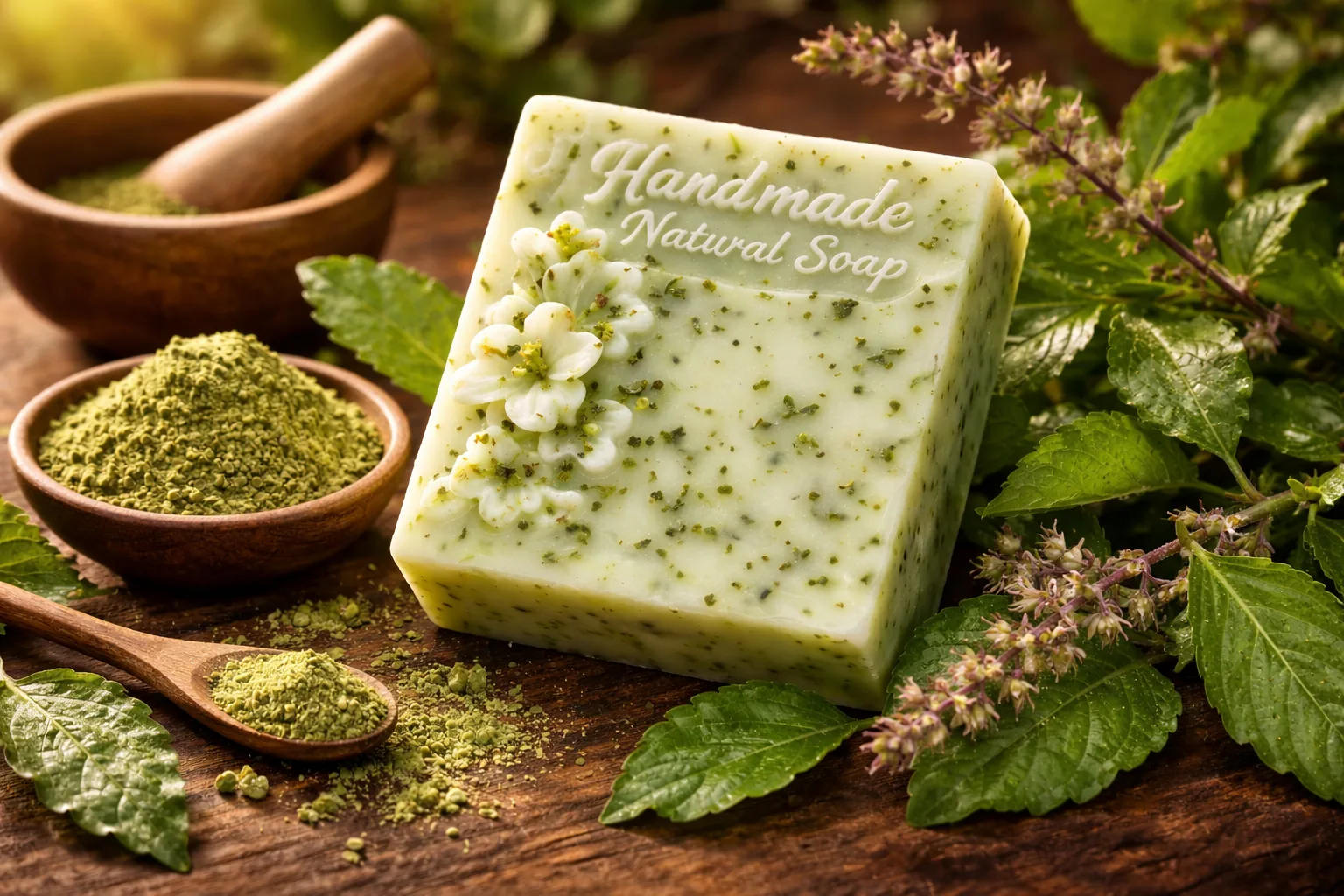
Made by hand in South Goa
Handmade soap with no SLS, parabens, or synthetic fragrance. Send us a message on WhatsApp and we will help you find one that suits you.
Most Indian households have always had neem and tulsi somewhere in the home. Not because of marketing. Because of familiarity - generations of use across different climates and different seasons, and these two botanicals keep showing up in traditional personal care.
There is something worth paying attention to in that.
Neem - a traditional Indian botanical
Neem has been part of Indian personal care and home routines for a very long time. It is grown across the subcontinent and is one of the most recognised plants in Ayurvedic practice.
In a soap, neem adds a distinctive earthy, slightly herbal character. It is unmistakable. In a raw oil it is more pungent; in a soap it is considerably gentler, but the scent is there. Most people stop noticing it after a few uses. A few people never quite get used to it. Worth knowing before you try.
We grow neem on our farm in South Goa. The leaves go into the bar fresh, not as a standardised extract.
Tulsi - grown on the farm
Tulsi, or holy basil, is the other half of this combination. Like neem, it has a long history in Indian home life - most households in the country have it growing in a pot or in the garden.
In the soap, tulsi contributes a lighter, slightly floral-herbal note that softens the earthiness of the neem. The two together produce a scent that is distinctly Indian and distinctly natural.
We grow tulsi on the same farm. It goes into the batch at the same time as the neem.
Why a soap works for these ingredients
Neem oil applied directly to skin can be quite strong. In a soap, you get contact with both ingredients during the wash and then rinse them away. This makes neem and tulsi practical for daily use in a way that concentrated raw applications often are not.
Who tends to reach for this bar
People who prefer a strongly natural, traditional-feeling soap. People who grew up with neem and tulsi in the home and want that familiarity in a clean, modern format. People who prefer an unscented soap but want the earthy botanical character rather than a plain blank slate.
It is also our most distinctive-smelling bar. If you are buying for someone else, that is worth keeping in mind.
You can find our neem-tulsi soap and the rest of our range in the Healing Soil shop.
Written by Healing Soil
Want the full picture? Read our complete guide to handmade soap in India.