Shea Butter and Goat Milk Soap: The Best Natural Choice for Dry, Sensitive Skin
Dry skin and sensitive skin often go together, and most soaps make both worse. Here is why shea butter and goat milk soap are the two natural options worth knowing about, and how to choose between them.

There is a specific kind of skin frustration that comes when dryness and sensitivity overlap. Your skin needs moisture desperately, but anything you put on it risks a reaction. Rich creams sting. Most soaps leave you tight and irritated. Even products marketed as gentle manage to find a way to cause a flare.
It is one of the more common skin situations people deal with, and it is one where most products simply fail.
Two natural soap ingredients are consistently recommended for this combination: shea butter and goat milk. Both are genuinely worth the reputation. They work differently, suit slightly different needs, and are worth understanding properly before you choose one.
Why dry skin and sensitive skin so often come together
Healthy skin has a protective barrier made up of oils, proteins, and moisture. This barrier keeps hydration in and irritants out. When it functions well, your skin is comfortable and does not react to things it should be able to tolerate.
Chronically dry skin usually means this barrier is compromised. Moisture escapes too easily. And when the barrier is thin, irritants get through more easily too. So dryness and sensitivity tend to feed each other. You strip moisture, the barrier gets thinner, more things irritate, the inflammation dries the skin further.
The typical commercial soap accelerates this cycle. Synthetic foaming agents strip the barrier with every wash. Synthetic fragrance, one of the leading causes of skin reactions, is present in almost everything. The bar that is supposed to be cleaning you is quietly making things worse.
What shea butter soap does that most soaps cannot
The defining property of shea butter in soap is that a portion of it does not break down during the soap-making process. Soapmaking involves a chemical reaction that converts most fats and oils into cleansing molecules. With shea butter, a fraction resists this conversion and remains intact in the finished bar.
When you wash with a shea butter soap, these intact shea molecules are deposited on your skin. They do not rinse away. What you are left with after washing is skin that has been cleaned and simultaneously conditioned, not stripped and then abandoned to its own recovery.
For skin that is dry, this matters enormously. The conditioning is happening at the moment of maximum exposure, not an hour later when you remember to apply moisturiser. For skin that is sensitive, shea butter has a natural anti-inflammatory quality that is well-documented. It does not just sit on the surface. It actively works with skin that is reactive.
The lather is soft and creamy, not aggressive. The feeling afterwards is comfortable, not squeaky-clean in the way that signals your skin's oils have been stripped.
What goat milk soap brings to sensitive skin specifically
Goat milk soap works on a different mechanism, and it is one that sensitive skin particularly benefits from.
Goat milk contains lactic acid, which is a naturally occurring alpha-hydroxy acid. It gently dissolves the bonds holding dead skin cells on the surface, allowing them to lift away without any scrubbing. This is the mildest form of exfoliation possible: no grit, no friction, just chemistry that your skin handles easily.
Dead skin cell buildup is one reason sensitive skin stays dull and reactive. The cells accumulate faster than they shed, and the resulting layer traps irritants, makes moisturisers absorb poorly, and contributes to the patchy, uneven texture many people with sensitive skin experience. Gentle removal of that layer changes how the skin looks and how it responds.
Goat milk is also naturally rich in vitamins A, B2, B3, B6, B12, C, D, and E, along with minerals and proteins that support skin health. It contains fats that are structurally close to the oils human skin produces, which makes them easy to absorb without clogging. The pH of goat milk is closer to skin's natural pH than most soap alternatives, which reduces the disruption that washing inevitably causes.
For sensitive skin, the goat milk bar tends to be the easier place to start. It is deeply nourishing without the richness that could feel heavy on a warm day or on skin that is only mildly dry.
How to choose between them
If your skin is very dry, the kind that feels tight within minutes of washing, gets rough in patches, or becomes significantly worse every winter, shea butter soap is likely the better choice. The intensive moisture it leaves behind is what that level of dryness needs.
If your skin is more sensitive than it is dry, prone to redness, reactions, tightness from synthetic ingredients, or general unpredictability, start with goat milk. The lactic acid gently resets the surface while the fats nourish without overwhelming.
If both descriptions sound familiar, as they do for many people, the practical approach is to try goat milk first because it is gentler to start with, and move to shea butter if you feel you need more moisture. Some people use one for the face and the other for the body. Neither rule is fixed.
Why the soap itself matters, not just the ingredient
The benefits of shea butter and goat milk only reach your skin if the soap base is right. Both ingredients can be added to a commercial soap loaded with sulphates and synthetic fragrance. The marketing will still say "with shea butter" or "goat milk formula." But if the rest of the bar is stripping and irritating, the small percentage of beneficial ingredient is not going to overcome that.
For either soap to genuinely work, the bar needs to be free of synthetic foaming agents, synthetic fragrance, and unnecessary additives. The ingredient list should be short and readable. The soap should retain its natural glycerin, which commercial manufacturers routinely remove, because glycerin is what keeps the bar moisturising rather than just cleansing.
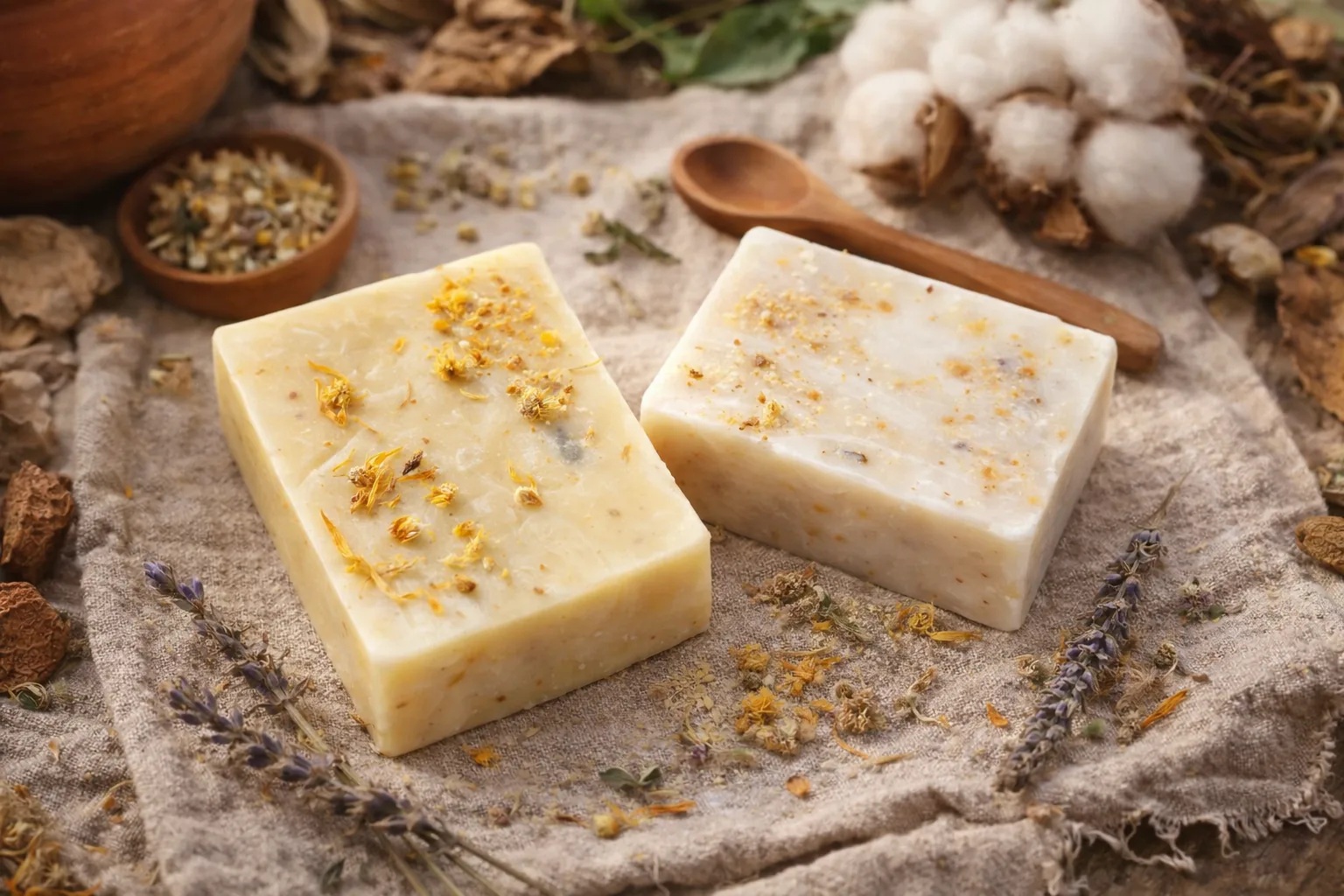
At Healing Soil, we make both our shea butter and goat milk soaps in small batches from our base in South Goa, to order. No preservatives, no synthetic fragrance, no additives that serve the product's shelf life at the expense of your skin. The soaps are made the way Healing Soil started: with ingredients chosen because they are actually good for skin.
Both are available in the shop. If you have been dealing with dry, sensitive skin for a long time and have not yet tried a genuinely natural bar, this is the most straightforward switch you can make.
Written by Healing Soil
Try our handmade soaps
Made to order from our farm in Goa. No chemicals. No shortcuts.
Shop the collection