Goat milk soap for sensitive skin: what makes it different from regular soap
Goat milk soap works well for sensitive skin because of specific properties in the milk itself, not because of marketing. Here is what goat milk actually does in a soap bar, how it compares to glycerin and shea butter bases, and who benefits most in India.
Try the starter bundle
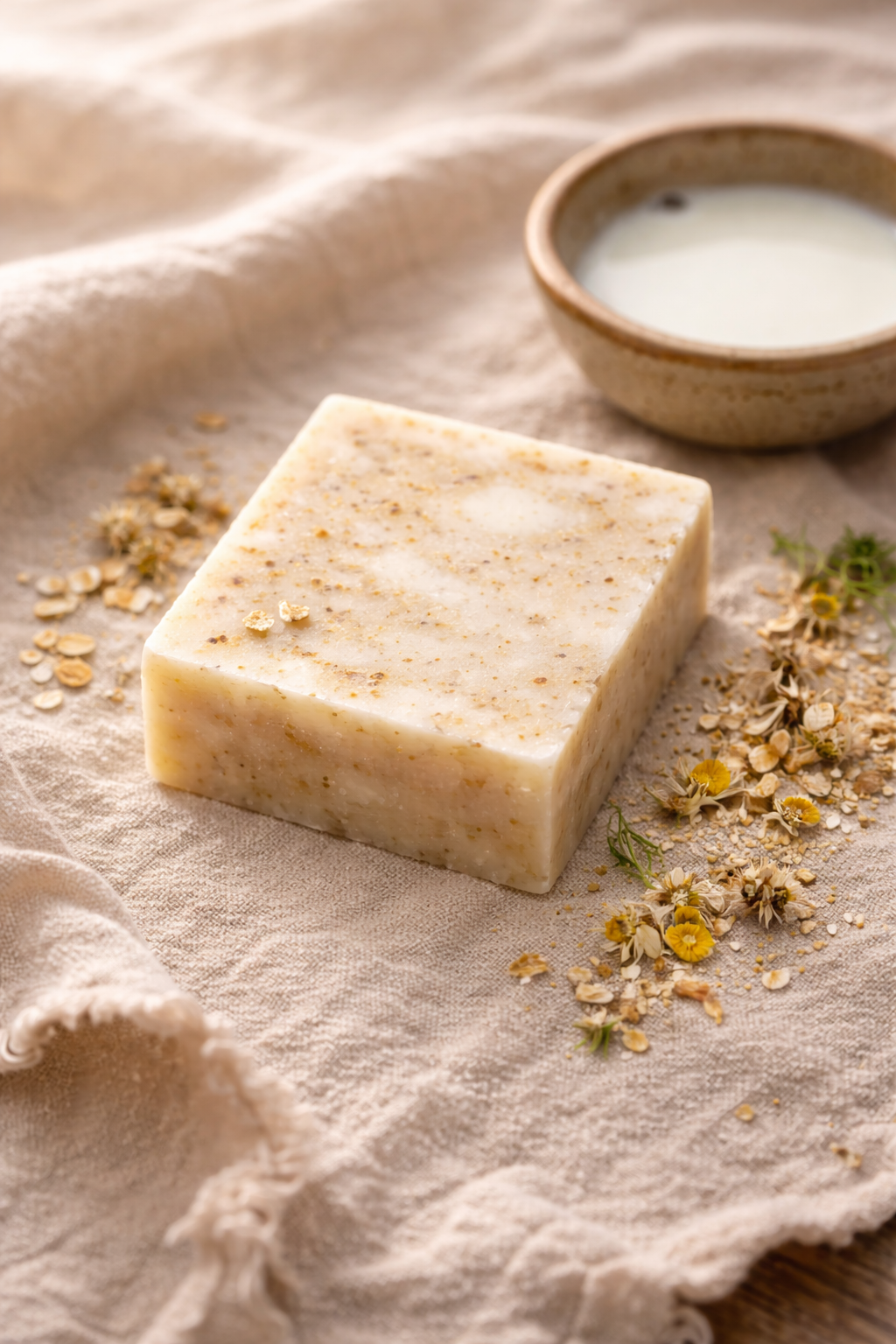
Four soaps, ₹1,000. SLS-free, made to order from Goa. Free shipping.
Sensitive skin is not one thing. For some people it means redness that comes and goes. For others it is a constant tightness after washing, or a tendency to react to products that everyone else seems to tolerate fine. The common thread is a skin barrier that does not have much tolerance for disruption.
Most soap feels harsh on sensitive skin. Goat milk soap, made properly, tends not to. Understanding why requires looking at what is actually in goat milk and what it does when it meets your skin.
The properties that make goat milk different
Lactic acid
Goat milk contains lactic acid, a naturally occurring compound also found in fermented foods and other traditional personal care ingredients. In a goat milk soap, it contributes to the overall feel of the lather - gentler and creamier than a soap made with water.
The concentration in goat milk is mild. It is one of several reasons a goat milk bar typically feels softer to use than most commercial alternatives.
Fat composition
Goat milk contains a higher proportion of short and medium chain fatty acids than cow's milk. These smaller fat molecules are structurally closer to the lipids your skin produces naturally, which means your skin recognises and absorbs them with very little resistance.
The practical result is that the moisturising effect of goat milk soap does not sit on the surface or leave a film. It absorbs. Skin feels nourished rather than coated.
For sensitive skin that tends to react to heavy, occlusive moisturisers, this kind of absorbent nourishment is considerably more comfortable.
pH and composition
Goat milk has a pH that sits closer to skin's natural range than most cleansing products, which is part of why it tends to feel gentler after washing. The milk also contains a natural mix of vitamins and minerals - A, B-group, C, D, E, and trace minerals like zinc and selenium - in the proportions they occur naturally in milk.
Why it works as a daily soap, not just a treatment
A lot of products marketed at sensitive skin are treatments. They are applied once or twice a week, or in response to a flare, or as part of a complicated routine. There is a place for that. But what causes the most damage to sensitive skin is what happens every day.
You wash, probably twice. Each time, you use something that strips the surface, disrupts the pH, and leaves the barrier to rebuild on its own. The barrier rebuilds. You wash again. Eventually it stops rebuilding as well as it used to.
Goat milk soap interrupts this cycle because it does not strip in the first place. Natural glycerin, which is retained in properly made handmade soap unlike commercial bars where it is removed, moisturises as you clean. The fats nourish rather than strip, and the pH stays closer to skin's natural range so the barrier is less disrupted with every wash.
This makes it suitable for daily use. Face and body. Every wash. Without the accumulation of minor damage that most sensitive-skin people have come to accept as normal.
Who it suits
Goat milk soap is specifically well-suited to:
Reactive skin that flares unpredictably in response to ingredients, particularly synthetic fragrance, sulphates, and preservatives, which a properly made goat milk soap will not contain.
Dry and sensitive skin together. A common combination where the skin needs moisture but also tends to react to rich or heavy products. Goat milk sits at the intersection: nourishing but absorbent.
Skin transitioning off commercial products. The first few weeks after switching from a synthetic soap can involve a settling period as your skin adjusts to not being stripped daily. Goat milk soap is one of the gentler places to start that process.
Mature skin. Skin loses lipids and resilience with age, making the fatty acid content in goat milk increasingly relevant. The creamy, nourishing lather suits skin that needs gentle cleansing without any stripping.
Children and teenagers. Skin that has not yet built tolerance to harsh products benefits from the same mildness that reactive adult skin needs.
If you are still deciding whether goat milk is the right base for you, the broader guide to natural soap for sensitive skin in India walks through label checks and all three bases side by side.
What to look for in a goat milk soap
Not all goat milk soaps are equal. The ingredient does its work only if it is present in meaningful quantity and if the rest of the soap is not undermining it.
A goat milk soap worth using should have goat milk as a primary ingredient, not a trace addition at the end of a long list. It should be free of synthetic fragrance, SLS, and artificial preservatives. The ingredients list should be short and readable. And it should retain its natural glycerin rather than having it extracted during manufacturing.
If the bar claims to be goat milk soap but also contains sulphates and artificial fragrance, the goat milk is a marketing label. The benefits described here require that the soap base itself is clean.
How Healing Soil makes it
At Healing Soil, our goat milk soap is made in small batches at our farm in South Goa. Goat milk replaces water in the base, so the milk is not an additive. It is a structural ingredient. The bars are made to order, which means they have not been sitting in storage losing moisture. There are no synthetic fragrances, no sulphates, no preservatives chosen for shelf life at the expense of skin.
Healing Soil started making these soaps because we needed something that worked on our own skin every day. That is still the standard they are held to.
If you have been looking for a daily soap that your skin can actually settle into, rather than one you use and recover from, you can find our goat milk soap in the shop.
Written by Healing Soil
Want the full picture? Read our complete guide to handmade soap in India.