What people mean by chemical-free soap in India
Soap is never literally chemical-free. Here is how to read the phrase, check the ingredient list, and find a simpler handmade bar.
Made by hand in South Goa
Handmade soap with no SLS, parabens, or synthetic fragrance. Send us a message on WhatsApp and we will help you find one that suits you.
“Chemical-free soap” is a common search phrase, but it is not scientifically literal. Water, oils, glycerin, and soap itself are all chemicals.
What most shoppers mean is a bar with a short, transparent ingredient list and without selected synthetic additives such as SLS, parabens, or synthetic fragrance.
Read the ingredient list first
Packaging words such as “natural,” “pure,” and “herbal” do not tell you everything in the bar. The ingredient list is more useful.
If you want a simpler formulation, look for:
- A clearly named soap base
- Oils, butters, milk, botanicals, or essential oils listed specifically
- No SLS or SLES
- No parabens
- No synthetic fragrance
“Fragrance” or “parfum” can refer to a formulated scent blend. If avoiding synthetic fragrance matters to you, ask the maker how the bar is scented.
Technical names are not automatically a problem
Cosmetic labels often use INCI names, the standard international names for ingredients. Shea butter may appear as Butyrospermum parkii butter, and coconut oil as Cocos nucifera oil.
These names can look unfamiliar while still describing ordinary plant-derived ingredients. A transparent maker should be able to explain each item plainly.
What Healing Soil means by a simple bar
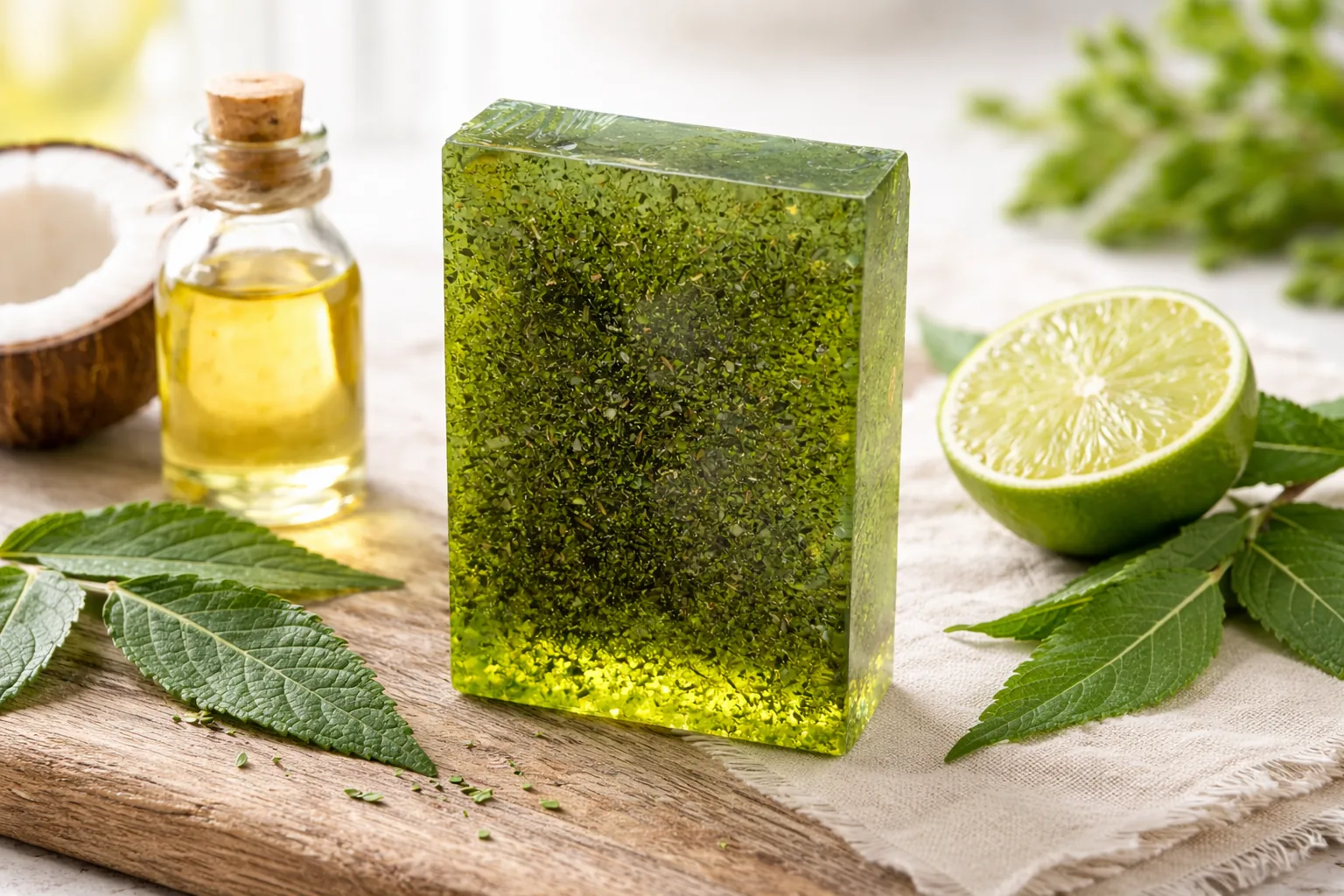
Healing Soil uses sourced, already-saponified glycerin, goat milk, and shea butter soap bases. We melt them in small batches and hand-pour them with the ingredients listed for each product.
Every bar is made without SLS, parabens, or synthetic fragrance. The range uses natural oils and botanicals and is made to order in South Goa.
Choose by base and feel
Once the ingredient list matches your preferences, compare the lather:
- Glycerin soap feels light.
- Goat milk soap feels creamy.
- Shea butter soap feels rich.
For a wider comparison, read the complete guide to handmade soap in India.
Written by Healing Soil
Want the full picture? Read our complete guide to handmade soap in India.