How pomegranate peel becomes a handmade soap bar
Sun-dried pomegranate peel, two soap bases, and one small-batch process in Goa.
Made by hand in South Goa
Handmade soap with no SLS, parabens, or synthetic fragrance. Send us a message on WhatsApp and we will help you find one that suits you.
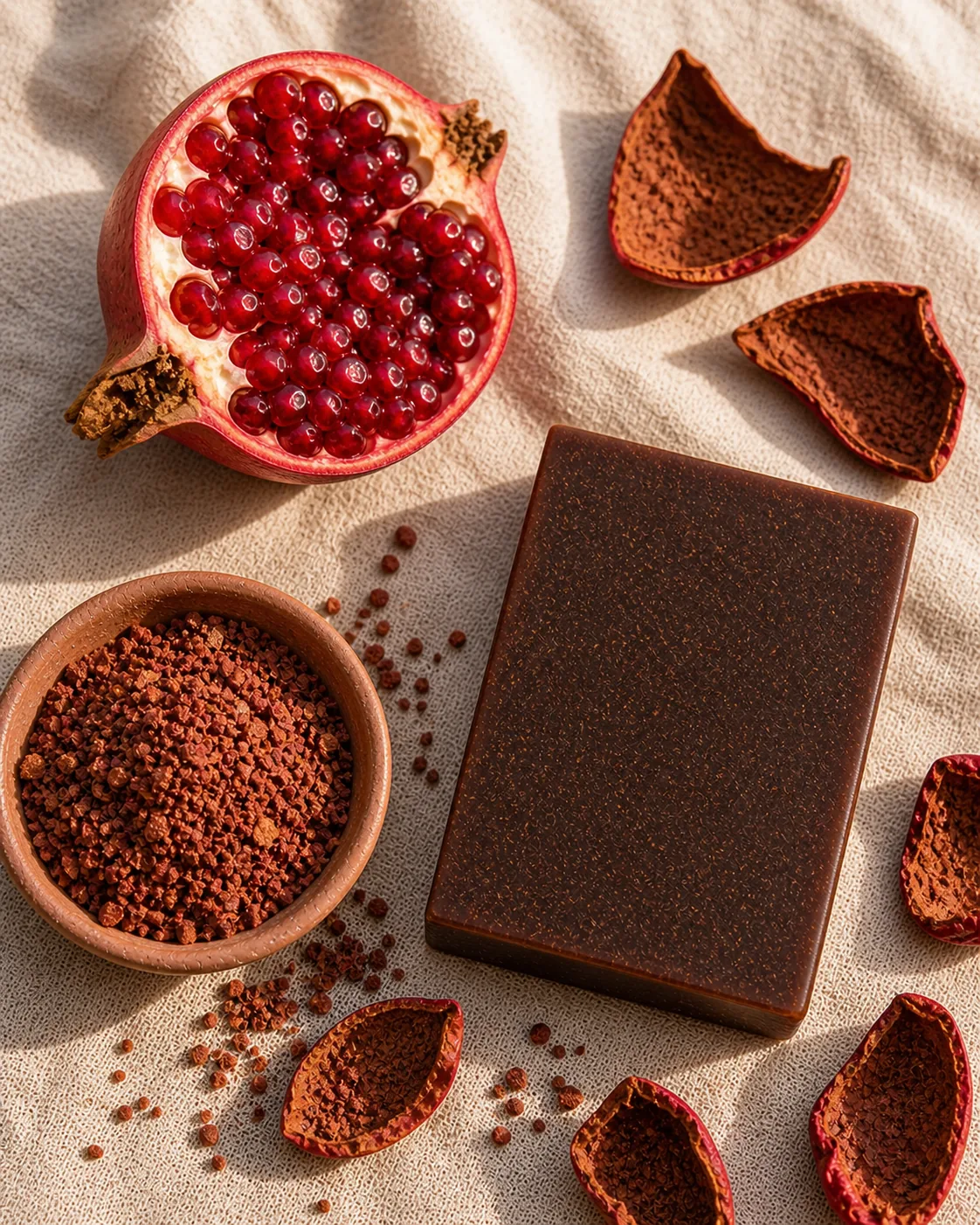
Pomegranate peel is usually discarded after the fruit is eaten. For our pomegranate soap, the peel becomes a botanical ingredient with a warm colour and subtle natural texture.
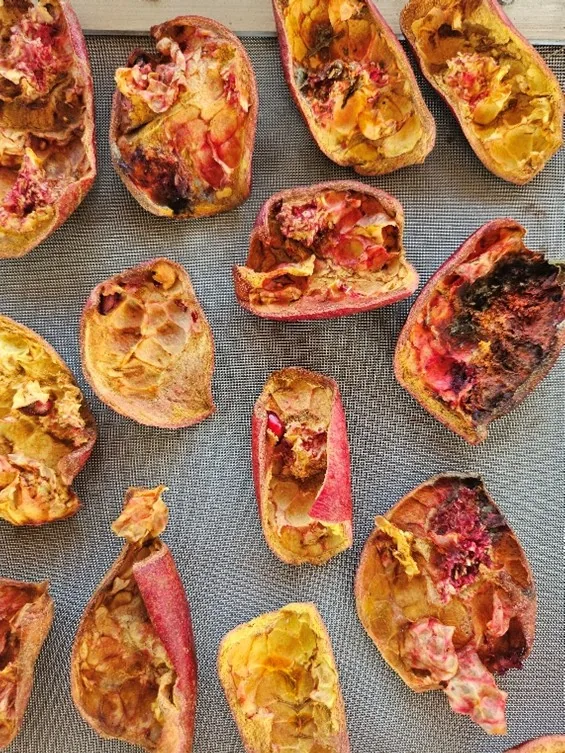
Step 1: clean and dry the peel
The peel is cleaned, cut into smaller pieces, and spread in a thin layer to dry. Good airflow matters: the pieces need to become fully dry before grinding so the finished powder stores well and mixes evenly.
Step 2: grind the dried peel
Once dry, the peel is ground into a fine botanical powder. The powder adds a muted earthy tone and a quiet fruit-and-plant character rather than a synthetic perfume.
Step 3: choose the soap base
We make pomegranate soap in two versions:
- Pomegranate glycerin soap for a lighter lather and easy-rinsing feel.
- Pomegranate goat milk soap for a creamier lather and richer feel.
Both are made without SLS, parabens, or synthetic fragrance.
Step 4: mix and hand-pour
The soap base is melted slowly, the prepared pomegranate peel is mixed through the batch, and each bar is poured by hand. After setting, the bars are checked, packed, and prepared for dispatch from Goa.
What the finished bar feels like
Choose glycerin if you like a light wash. Choose goat milk if you prefer a creamy texture and a more nourishing after-wash feel. Keep either bar on a draining soap dish so it can dry between uses.
Browse the pomegranate ingredient page for the complete product list and ingredient notes, or read pomegranate soap benefits for how the finished bar looks and feels in each base.
Written by Healing Soil
Want the full picture? Read our complete guide to handmade soap in India.