Soap for sensitive skin in India: a gentle label guide
A practical guide to choosing gentle soap for sensitive skin types in India: SLS-free bases, label checks, and mild handmade options.
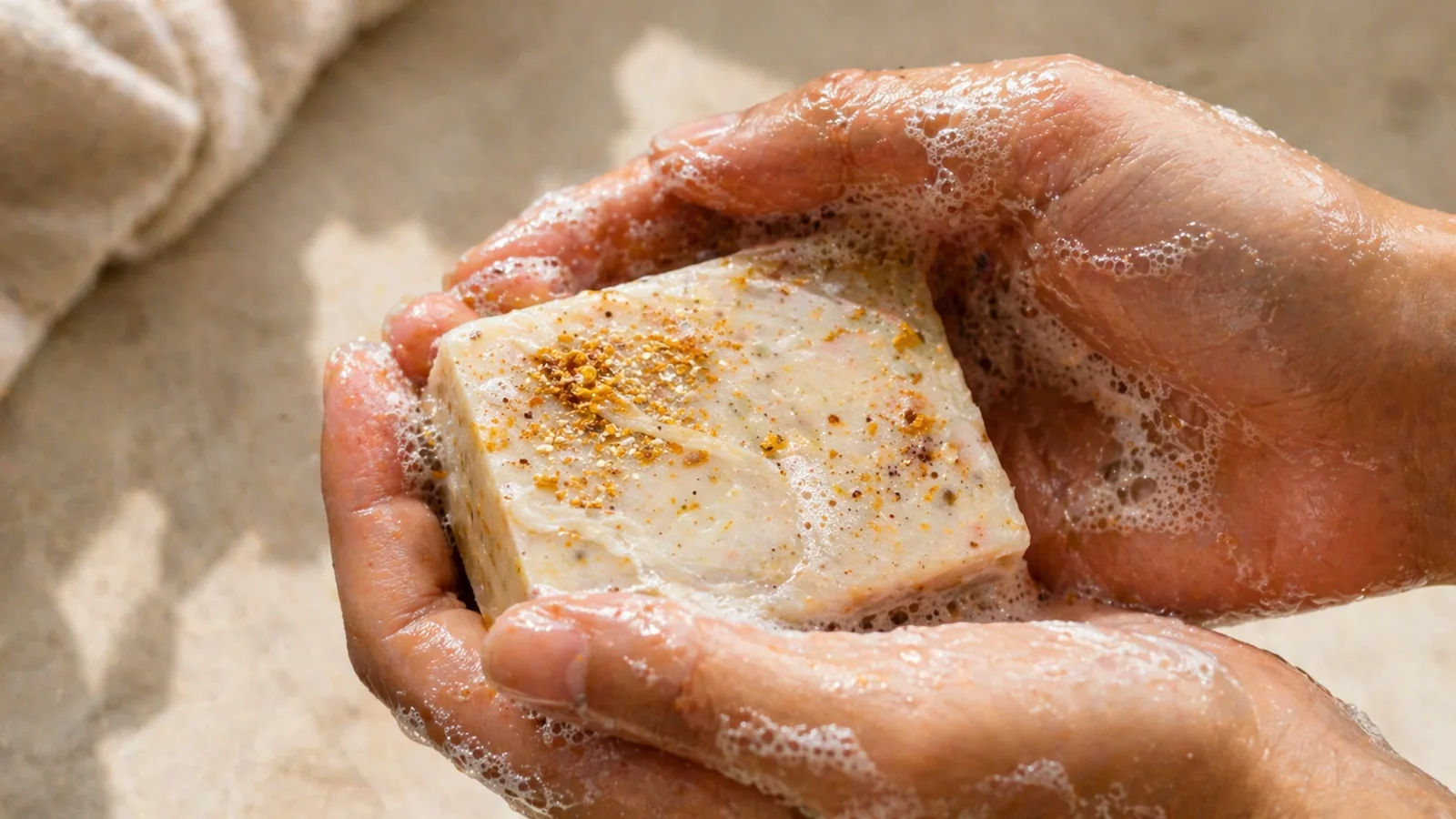
Made by hand in South Goa
Handmade soap with no SLS, parabens, or synthetic fragrance. Send us a message on WhatsApp and we will help you find one that suits you.
If your skin prefers mild products, the right soap base matters. Many everyday bars feel strong, heavily scented, or tight after rinsing.
For anyone searching for a gentle soap for sensitive skin in India, the first step is reading the label: no SLS, no parabens, and no synthetic fragrance. A sensitive-skin soap is not a speciality product — it is simply a mild bar made without these common synthetic additives.
Many commercial soaps sold in India contain all three. SLS creates fast foam, parabens are synthetic preservatives, and synthetic fragrance is often listed only as "fragrance" or "parfum." If your skin prefers a simpler routine, these are the first label terms to check.
Healing Soil makes without all three — small-batch, handcrafted in Goa, ships pan-India. Here is what to look for and which base suits your skin.
Start with the complete label
SLS is a surfactant used in some cleansing products to create fast foam. Whether or not you choose it is a label preference; the important point is to compare the complete formula rather than relying on a single marketing word.
For some skin types, that fast-foam wash can feel too strong. The bar may leave skin feeling tight after bathing, especially when combined with hard water, heat, or frequent washing.
If your skin prefers mild products, the practical move is to choose a simpler bar first before adding more steps to the routine.
Commercial soap also frequently contains synthetic fragrance, listed as "fragrance" or "parfum" without further detail. If you prefer a quieter routine, choose bars scented with botanicals or essential oils, or choose an unscented option where available.
Account for local water
Water hardness varies by city, neighbourhood, and source. Harder water can make soap slower to lather. Wet the bar and your hands, build the lather gradually, and rinse well rather than automatically using more product. Our city guides for Bangalore, Chennai, and Hyderabad include practical local storage notes.
What "natural" actually means on a soap label
The word natural is not regulated in India for cosmetics. Any brand can use it regardless of what is in the product.
What to actually look for on the label:
- No SLS or SLES - sodium lauryl sulfate or sodium laureth sulfate
- No parabens - listed as methylparaben, propylparaben, butylparaben
- No synthetic fragrance - if "fragrance" or "parfum" appears without further detail, it is synthetic
- No PEG compounds - polyethylene glycol derivatives, often listed as PEG followed by a number
A bar that avoids all of these is genuinely different from most commercial soap, even if it does not use the word natural anywhere on the packaging.
How to read a soap ingredients list
Soap labels in India follow the same descending-order rule as food labels: highest-quantity ingredient listed first.
SLS, if present, usually appears in the top five ingredients. It is a primary ingredient, not a trace. Look for it there first.
Handmade soap bases often appear under INCI names - the international standard for cosmetic ingredient naming. Coconut oil appears as "cocos nucifera oil." Shea butter as "butyrospermum parkii butter." Glycerin as "glycerin." These are fine - they are simply the standardised Latin-origin names for real ingredients.
The sulfate compounds to avoid - sodium lauryl sulfate, sodium laureth sulfate, sodium coco sulfate - use those exact words. If none appear in the list, the soap is at least SLS-free.
If there is no ingredient list at all, that is worth noting. Any responsible soap maker, handmade or otherwise, should tell you what is in the bar.
Which base suits sensitive skin
Once you have found an SLS-free option without synthetic fragrance, the base matters.
Glycerin gives the bar a light lather and an easy-rinsing feel. It is a useful starting point for people who do not want a rich finish.
Goat milk replaces water in the soap base. It gives the bar a particularly creamy, gentle lather and a softer after-wash feel. For sensitive, dry, or combination skin types, goat milk is usually the most versatile base and the easiest place to start.
Shea butter is the richest of the three. It gives the bar a dense, conditioning feel during washing. It is a good fit when skin feels very dry or tight after showering, but it can feel too rich for oily skin.
For a deeper look at how the bases compare, the glycerin vs goat milk guide and the shea butter and sensitive skin guide cover each one in detail. You can also see goat milk soap vs commercial soap and glycerin soap vs regular soap.
If your skin mostly feels tight after bathing, the soap for dry skin page is a better fit than a general sensitive-skin guide. If your skin prefers a very mild daily bar, Honey Oats Glycerin Soap is a useful starting point. If you want a creamier bar, start with Goat Milk Soap and compare it with shea butter before choosing.
What to expect when you switch
If you switch from commercial soap to an SLS-free bar, the first week can feel different.
The lather may feel different from commercial soap. Handmade bars usually produce a creamier, quieter lather rather than a large synthetic foam.
The after-wash feel may also be different. Instead of a squeaky finish, an SLS-free bar should leave skin feeling clean, soft, and comfortable.
A soap is a daily wash product, not a medicine. What switching does reliably is simplify daily contact with synthetic additives. For many people, that alone changes how their bath routine feels day to day.
The easiest way to find what feels right
Skin is specific. A base that works well for one person may not work for another with similar skin. The practical answer is to try more than one before committing.
Healing Soil makes bars in all three bases: glycerin, goat milk, and shea butter. No SLS, no parabens, no synthetic fragrance. Made to order in small batches in Goa, ships pan-India in seven to ten days.
Trying a bar from more than one base is the simplest way to find which one feels best on your skin.
For more on how to choose and what to look for, the complete guide to handmade soap in India covers the full picture.
Written by Healing Soil
Want the full picture? Read our complete guide to handmade soap in India.